
Research
My research focuses on understanding aquatic biodiversity across ecological and evolutionary scales. I use a combination of field observations, laboratory experiments, molecular techniques, bioinformatics, and ecological modelling to investigate how biodiversity is distributed, how species evolve and interact, and how ecosystems respond to natural and human-driven change.
Current research themes include:
- Taxonomy and systematics
- Biogeography and macroecology
- Genomics and transcriptomics
- Environmental DNA (eDNA) and biodiversity monitoring
- Ecological and habitat suitability modelling
- Bioinformatics, data science, and machine learning
I am particularly interested in translating research into practical tools and evidence that support biodiversity monitoring, environmental management, and conservation.
For published outcomes from projects and collaborations, see full list of publications.

Key projects
Environmental DNA (eDNA) and biodiversity monitoring
Environmental DNA (eDNA) is transforming how biodiversity is monitored in aquatic ecosystems. My work focuses on the application of molecular tools to detect species, assess biodiversity, and complement traditional ecological survey methods. Current interests include the integration of eDNA into environmental monitoring programs, the interpretation of molecular data within ecological assessments, and the development of robust approaches for biodiversity monitoring, conservation, and environmental management.
Ecological modelling, machine learning, and data science
Ecological systems generate increasingly large and complex datasets, creating new opportunities to understand biodiversity patterns and inform conservation and management decisions. My research applies ecological modelling, bioinformatics, machine learning, and spatial analyses to investigate species distributions, habitat suitability, and ecosystem dynamics. Current projects include habitat suitability modelling for marine restoration and conservation planning, as well as the use of machine learning and artificial intelligence to automate the analysis of ecological imagery and other large environmental datasets.
Improving jellyfish identification and monitoring to enhance beach safety on the Sunshine Coast
In collaboration with Sunshine Coast Council, this project integrates taxonomy, ecological monitoring, and data analysis to improve jellyfish identification, refine regional monitoring datasets, and investigate patterns of species occurrence, seasonality, and community composition. The project aims to advance understanding of jellyfish biodiversity and ecology while supporting evidence-based management of coastal environments and beach safety programs.
Developing advanced diagnostic tools for QX disease in oyster aquaculture
In collaboration with the Queensland Department of Agriculture and Fisheries (DAF) we are developing advanced diagnostic tools for QX disease in oyster aquaculture, including a reliable qPCR-based assay for the parasite Marteilia sydneyi and a field-friendly point-of-care solution. These tools will enhance our understanding of the parasite and improve disease management, contributing towards sustainable oyster aquaculture and industry.
Using genomics to unravel the increasing aggressiveness of Ascochyta blight disease in chickpea
Ascochyta Blight caused by Ascochyta rabiei is a major biotic threat to chickpea (Cicer arietinum) worldwide and it incurs substantial costs to the Australian multimillion-dollar chickpea industry in disease control expenses and in yield losses. We are integrating advanced molecular biology tools to uncover the genetic factors driving aggressiveness, with the aim of developing molecular tools to rapidly determine an isolate’s potential to cause disease and improve breeding efforts for chickpea growers.
Monsur MB, Bar I, Lawley JW, Ford R. 2025. Effector molecules and pathogenicity-associated gene expression in Ascochyta rabiei. Fungal Biology 129:101668.
Article PDF
Vaghefi N, Bar I, Lawley JW, Sambasivam PT, Christie M, Ford R. 2024. Population-level whole-genome sequencing of Ascochyta rabiei identifies genomic loci associated with isolate aggressiveness. Microbial Genomics 10:001326.
Article PDF
Drivers of colour variation in jellyfish
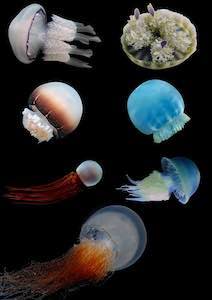
Colour can play an important role in an organism’s survival, providing camouflage and photoprotection, and influencing sexual selection and social interactions. The goal of this project was to investigate the endogenous and exogenous drivers of colour variation in the blubber jellyfish Catostylus mosalcus. One of the project’s results has been published, while others are in preparation.
Lawley JW et al. 2021. Rhizostomins: A Novel Pigment Family From Rhizostome Jellyfish (Cnidaria, Scyphozoa). Frontiers in Marine Science
Article PDF
Systematics of the moon jellyfish genus Aurelia
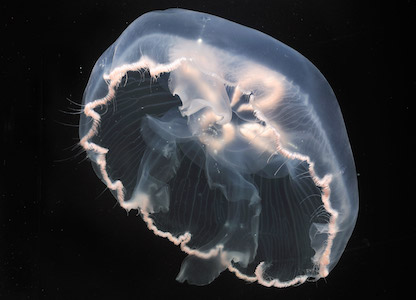
Since the 19th century, taxonomists have puzzled on how to identify moon jellyfish species. In this project, morphological and molecular data were analysed from a wide range of specimens to delimit and describe the cryptic species in the genus.
Lawley JW et al. 2021. The importance of molecular characters when morphological variability hinders diagnosability: systematics of the moon jellyfish genus Aurelia (Cnidaria: Scyphozoa). PeerJ
Article PDF
Phylogeography of the box jellyfish Alatina alata
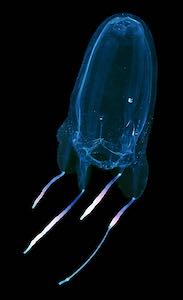
Alatina jellyfish are notorious for their sting along beaches where they occur, but it was unclear whether they were distinct or a single species with worldwide distribution. A phylogeographic analyses was reported in this project, which corroborated morphological and behavioural evidence to indicate the presence of a single, pantropically distributed species.
Lawley JW et al. 2016. Box jellyfish Alatina alata has a circumtropical distribution. Biological Bulletin
Article